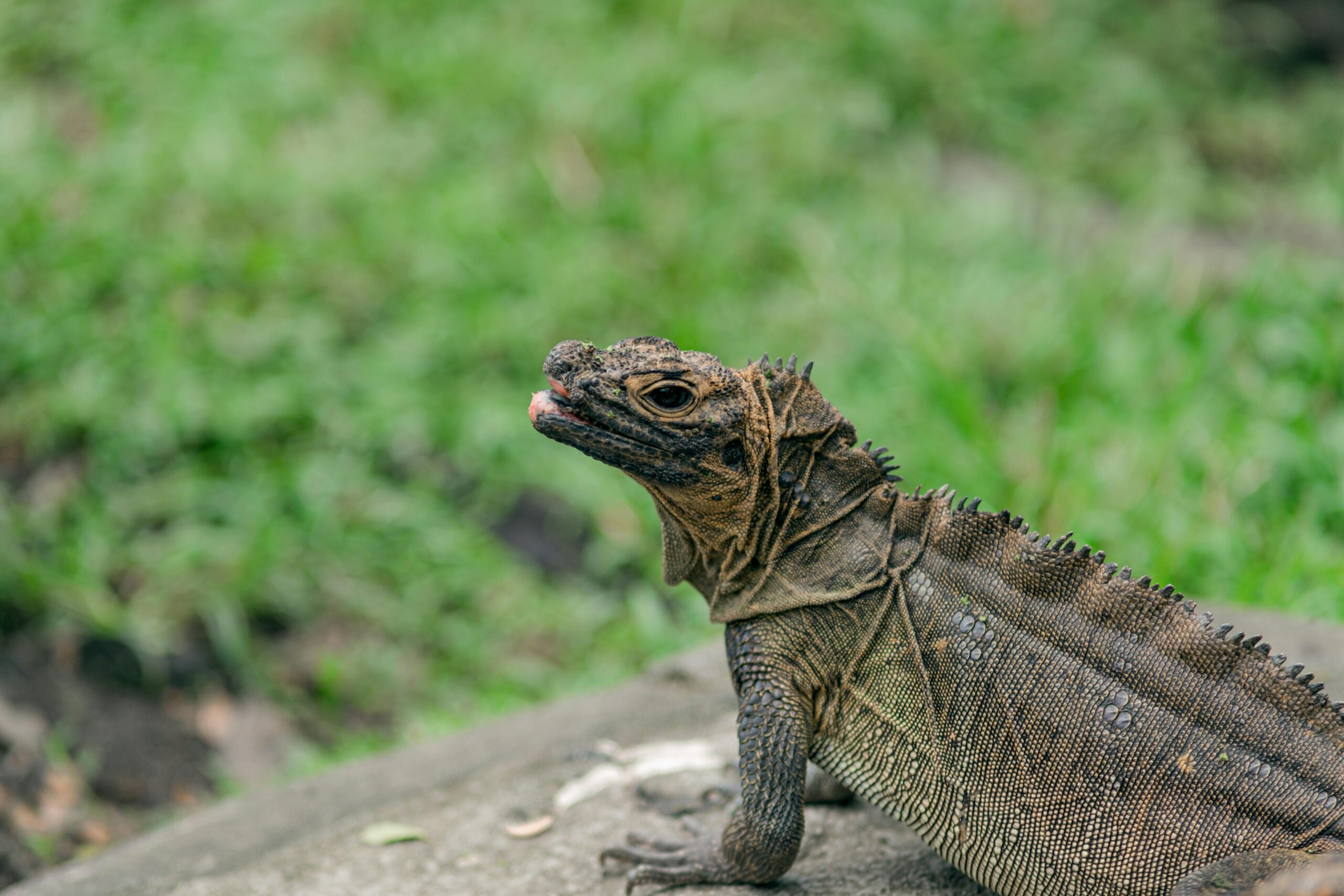
Stunningly prehistoric-looking, sailfin dragons are impressive lizards. Their majestic beauty, combined with unique appearance has made them popular lizards for advanced keepers. Sailfins have specific needs, in addition to high pet adoption and enclosure costs. These factors make providing optimal care a challenge.
Before adopting a sailfin dragon, check with your state on the requirements and restrictions. As an exotic pet, some states may not permit it or require special licensing.
What Are Sailfin Dragons?
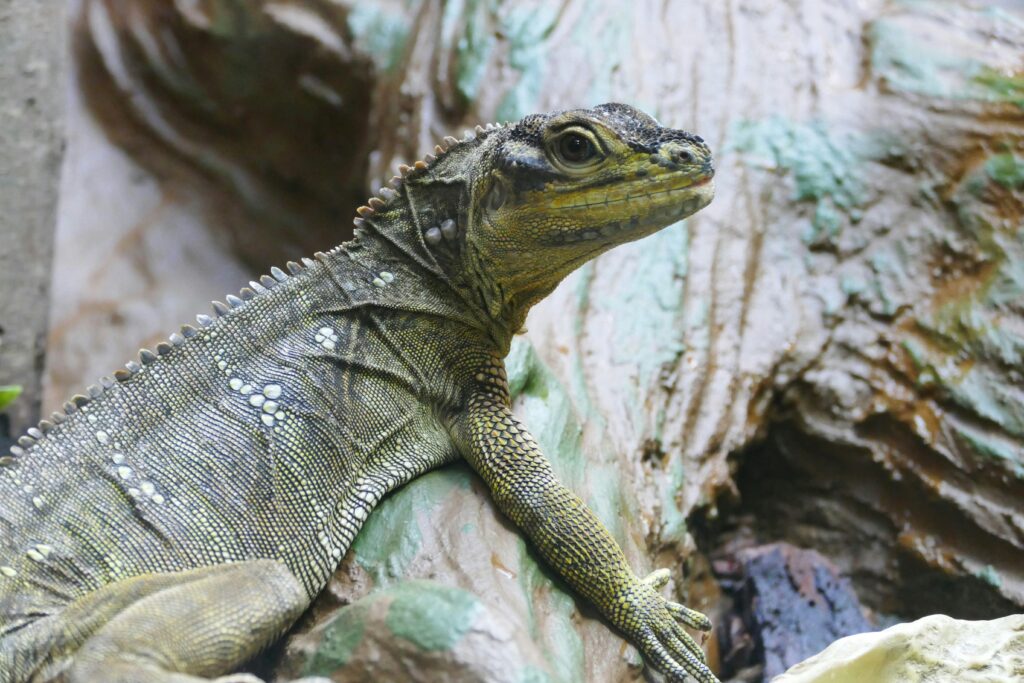
Sailfin Dragons, also called “Philippine Sailfin Dragons”, “Hydraosaurus pustulatus.” They are a member of the Agamidae family. In other words, these striking reptiles are related to the iguana.
Male sailfin dragons can grow up to 4 feet long, while females are a bit shorter.. Males are known for their vibrant green, blue, and purple colors, while female dragons have less vibrant features.
Asian water dragons are equipped with a fin near their tail and webbed feet. These features allow them to glide along water. While sailfins enjoy being in the water, they also spend time in the trees and bask in the sun.
Because of their daily activities, most reputable keepers and breeders recommend a custom-built tank that meets the unique requirements of a happy and healthy sailfin.
Sailfins originated in Southeast Asia, either in tropical broadleaf forests or near freshwater lakes and streams.
They became popular choices for pet reptiles in the 1990s when importers brought them to the United States. However, when exportation from their native habitat began, this species of water dragon became endangered. As of 2025, their status on the IUCN Redlist of Threatened Species is “Least Concern,” with a decreasing population. Although they’re fairly widespread in the Philippines, the destruction of their habitat and their removal from their homeland is concerning. .
Note: Wild-caught sailfins (like other reptile species) often have a parasite load and may not adjust well to captivity. So, reputable breeders and keepers encourage adopting captive-bred dragons from breeders and rescues.
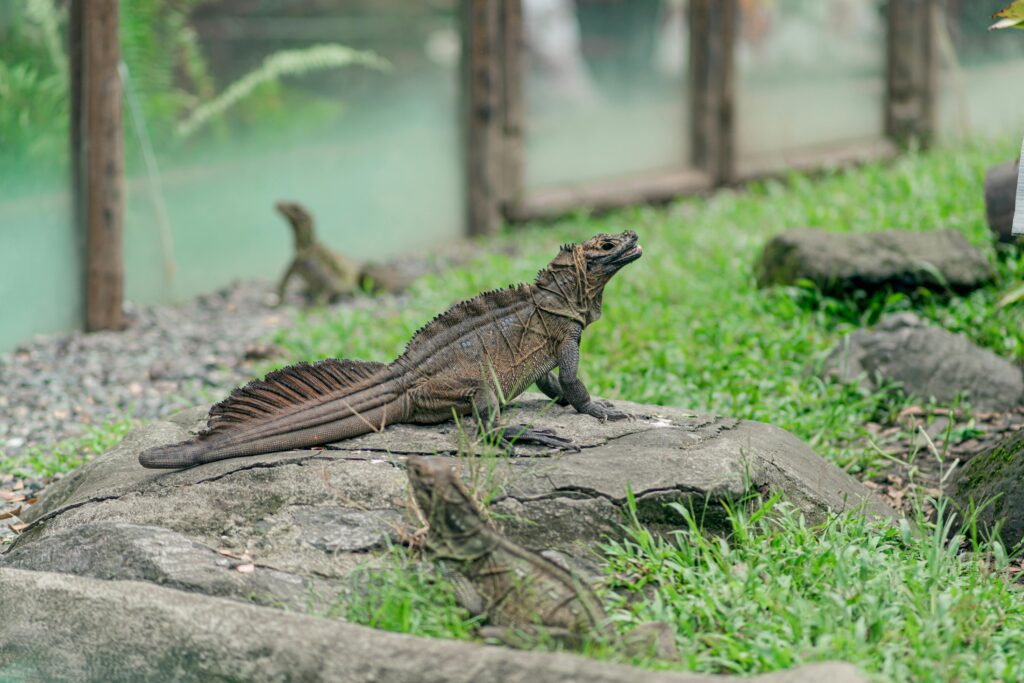
Enclosure and Space Requirements
As mentioned above, it is imperative to make sure your water dragon has the space it needs to grow, bask, and swim. They also need room to hunt and exercise for optimal health.
Failing to provide a proper environment for Sailfins can lead to serious illness, stress, and the very real risk of Metabolic Bone Disease.
The recommended minimum enclosure size for one sailfin is 6’L X 3 “W X 3’H However, bigger is better! If you can snag a larger cage, your sailfin dragon will be even happier.
Your dragon’s enclosure should be glass with excellent ventillation, and a blacked-out front opening to prevent stress and provide easy access for you.
If you are raising a baby sailfin dragon, a 30 – 55-gallon aquarium may be sufficient, for a while.. Be aware that your baby may run along the edges of glass, making them susceptible to snout and jaw injuries. Applying cardboard 3-4 inches along the lower edges can help prevent injury.
All About Heat, Humidity, and Lighting
Sailfins require plenty of bright light and UVB for physical and mental health. If you’re worried about your electricity bill, a sailfin dragon may not be the best choice for a reptile. They require 13 hours of constant lighting during the summer and 11 hours during the colder seasons. On occasion, you’ll also need to adjust the heating lamps.
UVB lighting is not enough to sustain a healthy environment for your sailfin. You will also need to illuminate the enclosure with a bright 6500K light, or a T5 HO Fluorescent. Keep in mind that the light must cover the entirety of your dragon’s housing. This is not only great for supporting a healthy dragon, but also healthy live plants.
Make sure your dragon has at least 6 to 12 inches of light to bask in.
Temperature Requirements
Sailfins are cold-blooded, which means they depend on the environment to maintain their body temperature. They need to have a temperature gradient that allows them to to travel back and forth, between warm and cool sides.
Below are three temperature settings to follow:
Basking area temperature: 90°F.
Cool side temperature(temps to maintain by their body of water): 77 F – 76 F.
Nighttime temperatures: 75°F – 77°F.
Keeping the temperatures in the above settings can help prevent health issues—a timer and thermostat are very helpful!
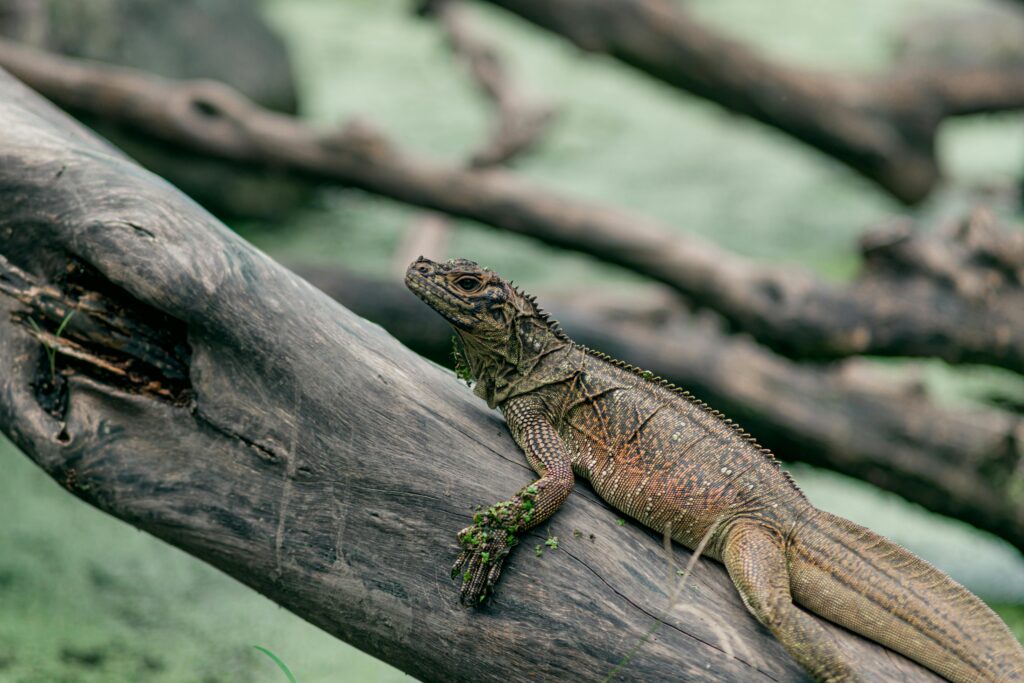
A Brief Note on Humidity Management
To prevent overheating or underheating your dragon, use a pump-style pressure water sprayer to keep the enclosure moist. The best time to spray the enclosure is every morning and night when it is dark—however, busy schedules may need help. A mister set on a timer can simplify this task.
Sailfin Dragon Care and Swimming: Why Your Dragon Needs a Body of Water in Their Environment
In the wild, your dragon would reside close to a lake or creek. It’s your job to create a similar habitat in their enclosure.
You’ll need to create a pool for your sailfin that can hold 65 gallons of water. In addition, you’ll need to clean and change water frequently to prevent sickness and maintain a happy dragon— or set up a filtration system that helps keep the water fresh for longer.
When Substrate Matters
Substrate may not be important for your dragon if their pool covers the entire bottom of their enclosure. If it doesn’t, you will need to use 4 inches of dampened coconut fiber to line the floor. Adding the coconut fiber can help provide a soft place to land in case your sailfin has a fall, but also helps maintain the humidity.
Sailfin Dragon Care: Sprucing Up the Environment
Adding interior decorating to your dragon’s home isn’t just for aesthetic purposes. It also provides mental stimulations, satisfies their hunting instincts, and promotes optimal wellness.
Not sure what’s safe or fun to include in their enclosure?
Here are a few ideas to get you started:
- Thick vines.
- Cork hollows.
- Shelving.
- Ledges.
- Live or fake plants such as hibiscus and spider plants.
- Rocks
When adding live plants to your dragon’s home, make sure they are not sprayed with dangerous pesticides. Your Chinese water dragon may take a nibble off a plant or may play with it, which is why plants should be sturdy and safe to eat.
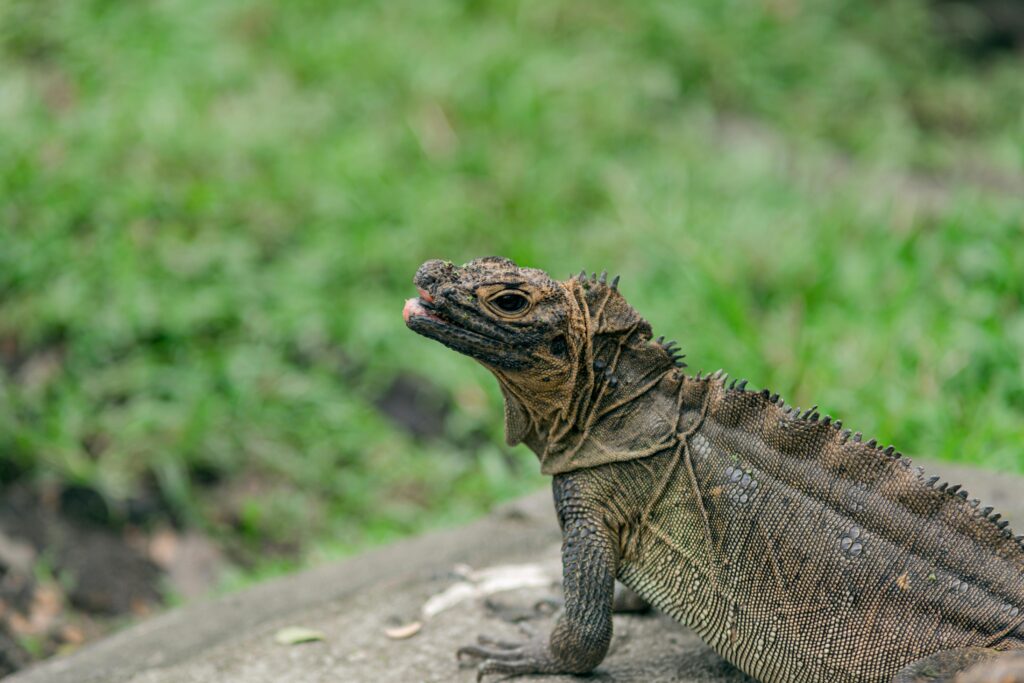
Feeding the Beast: What Sailfins Should Eat For Optimum Health
Sailfins require a mix of meat, veggies, and fruits in order to maintain a healthy physique. Failure to provide the right nutrition can lead to muscle weakness, anorexia, and death.
The feeding process may be difficult at first. Your sailfin may get bored with the same food every day. Therefore, you’ll need a variety of food to keep them full and satisfied.
Unsure of how much to feed your reptile? Here’s a simple guideline to get you started:
- Hatchlings (dragons 3 months and under) — Insects every day.
- Juveniles (dragons 16” long) — Insects and salad every other day.
- Adults (dragons 16” or longer) — Salad every day and bugs every 3 – 5 days.
You should also be aware to sprinkle vitamins and calcium powders on feeder insects. Make sure to use a 50/50 portion. Also, you will need to gut load insects and hydrate them 24 – 48 hours before nourishing your dragon with them.
Behavior and Handling
Sailfin dragons are better as display pets. They can be high-strung and may become stressed quickly. Wild-caught sailfins are harder to handle than captive-bred.
Always approach your dragon with a gentle and persistent approach. It may take time before they trust you.
If you are going to hand-feed your dragon, ALWAYS use tongs. NEVER feed your dragon with your hands. They may mistake your fingers for food, and give you a painful bite.
Before you begin handling your sailfin, allow them a 2-week time frame to adjust to their new home.
When the 2-week adjustment period has passed, begin by introducing yourself with food served on a pair of cloth-tongs. In the meantime, cleaning and spraying the enclosure daily will help your dragon get used to you.
After your dragon has become used to being fed with tongs, you can slowly move the tongs up your arm to get your dragon to climb and sit on you. Remember to clip their nails regularly, or you may end up with a nasty scratch. Even an accidental one can do damage.
Sailfin Dragon Companionship: Do You Need More Than One?
Sailfins are happy living a life of solitude. They do not require a mate unless you plan to breed them. Note that breeding sailfins will require a larger enclosure. It should also be addressed that male and female dragons will fight for their territory if they dislike each other. This makes breeding tedious and dangerous. Even an experienced keeper must supervise their dragons when they’re together during breeding season. They risk a nasty bite if the dragon feels provoked, or injury to one or both dragons.
Preventing Salmonella
Like most reptiles, sailfins can carry salmonella.Fortunately, by practicing proper hygiene, your risk of salmonella infections are very low. Simply washing your hands before and after handling your reptiles and not putting them in your mouth prevent almost all occurrences.
Sailfin Dragon Care: Estimated Cost
Sailfin dragons are generally affordable, costing between $300 – $3500, depending on whether you adopt a baby, an adult, or a pair.
Additionally, you can look to spend $1500 – $4000 on proper supplies, lighting, and veterinary checkups, which are required annually to screen for parasites and make sure your dragon is healthy.
Finally, electricity bills and food supply will cost anywhere between $200 – $1,000 per month or higher.
Conclusion
Sailfin dragons are rare, beautiful, and challenging reptiles that require advanced care and handling. With proper lighting, environmental setup, and care, you can prolong the life of your sailfin for at least 10 years. Finally, updated technology and better care can help prevent sailfin dragons from becoming extinct.
References
ReptiFiles®. (2024, October 27). Chinese Water Dragon Care Sheet | ReptiFiles.com. https://reptifiles.com/chinese-water-dragon-care-sheet/
Indiviglio, F. (2015, July 7). Sailfin Dragon Care and Conservation: a Zookeeper’s Notes. That Reptile Blog. http://blogs.thatpetplace.com/thatreptileblog/2014/11/25/sailfin-dragon-care-conservation-zookeepers-notes/Vallie, S. (2024, August 21). What to know about Sailfin Dragons. WebMD. https://www.webmd.com/pets/what-to-know-sailfin-dragons


Leave a Reply